 14 Oct
57 VAWG organisations write to Prime Minister opposing Earned Settlement proposa...
Today (14th October 2026), 50+ organisations working across the violence against women and...
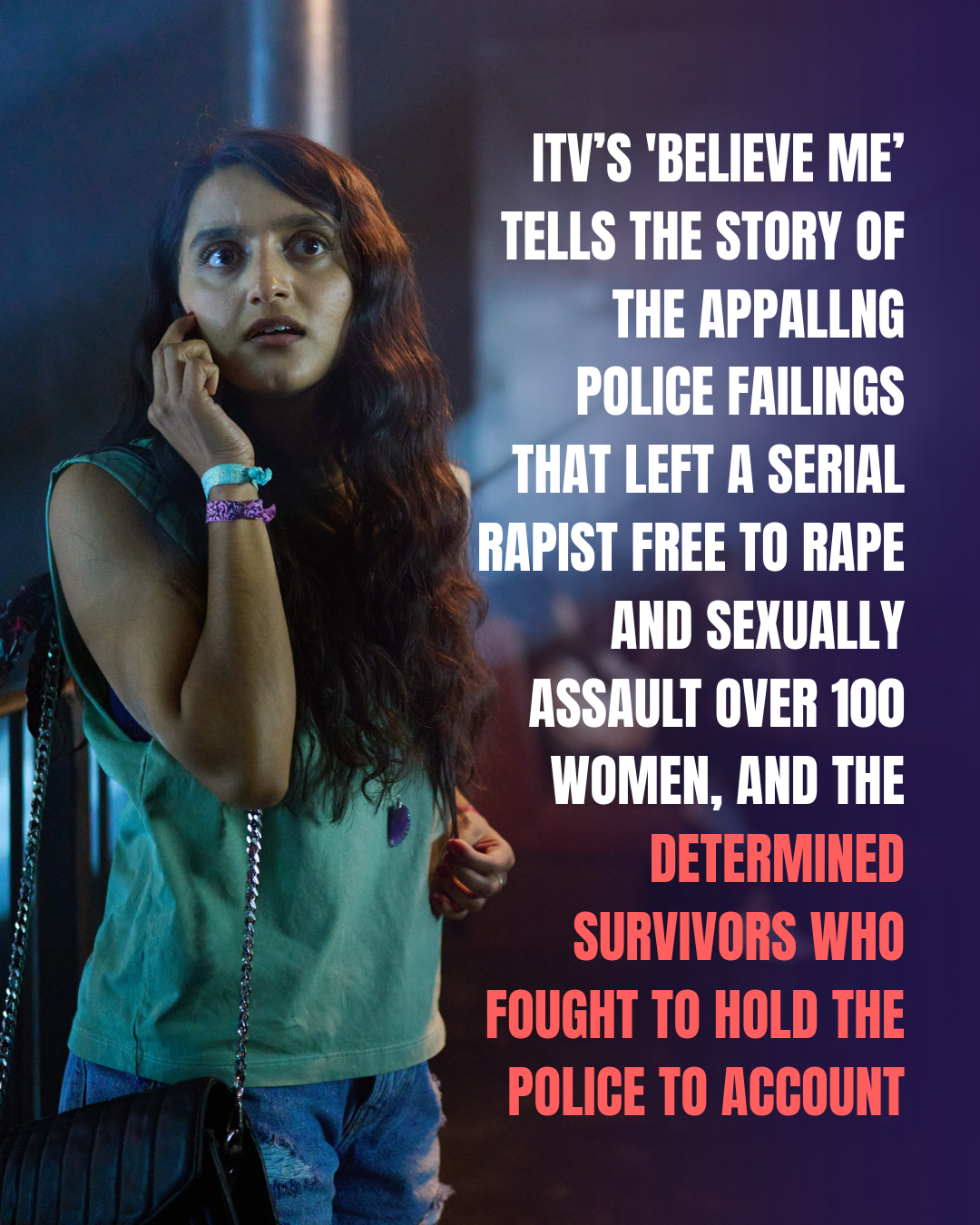
ITV’s ‘Believe Me’ tells the story of the appalling police failings that left serial rapist John Worboys free to rape and sexually assault over 100 women – and the determined survivors who fought to protect other women and hold the police to account. It is a deeply uncomfortable but powerful watch, enabling the survivors to be heard after the police tried to silence them for so long.
In ‘Believe Me’, we see each woman report rape to the police. But instead of a proper investigation, they face disbelief and attacks on their credibility. Pretty quickly, their cases are dropped. Sadly, their experiences are all too common, with survivors very often finding the justice process harmful and retraumatising.
Two of the women sued the Met Police for failing to properly investigate their cases, which might have prevented John Worboys from raping others. This landmark legal challenge, which End Violence Against Women Coalition, Southall Black Sisters, nia and Rape Crisis England & Wales intervened in, set a precedent that allows human rights claims to be brought when there have been significant failures to investigate. It established that the police have a duty under the Human Rights Act to investigate serious violence against women, and when they fail to meet this duty, they can be held accountable in the courts.
Unlike the majority of so-called ‘true crime’, this portrayal was shaped by the survivors’ experiences and informed by their lawyer, Centre for Women’s Justice founder Harriet Wistrich. It shows them not just as victims of a horrific assault but the driving force behind a landmark legal case that held the police to account and catalysed change.
Our Human Rights Act is often the only tool we have to hold the state to account when institutions like the police fail us. The legal precedent set by the two survivors is used by specialist support services each day to advocate for survivors trying to access justice.
That’s one key reason why we stand against repeated political threats to our Human Rights Act and the European Convention on Human Rights – because this legislation provides crucial tools for tackling violence against women and girls and holding the state to account. However, violence against women and girls is often wrongly used to justify rolling back these human rights protections, with misleading claims made about perpetrators by those with an anti-migrant agenda.
Alongside legal and human rights protections, we need cultural change. On-screen portrayals of violence against women and girls can play a powerful role in shaping public understanding of this abuse and how survivors are routinely failed.
“This drama shows how devastating investigative failures can be, and how important it is that survivors have a way to hold institutions to account when things go wrong. In portraying the courage of the two women, we learn how gruelling the process of reporting rape can be but also how, by standing up for their rights, they have left a lasting legacy.”
14 Oct
06 Oct
 28 Sep