 06 Oct
80+ expert organisations call on government to act on sexual violence in schools...
Today (5th October 2026), 80+ organisations working across the violence against women and ...
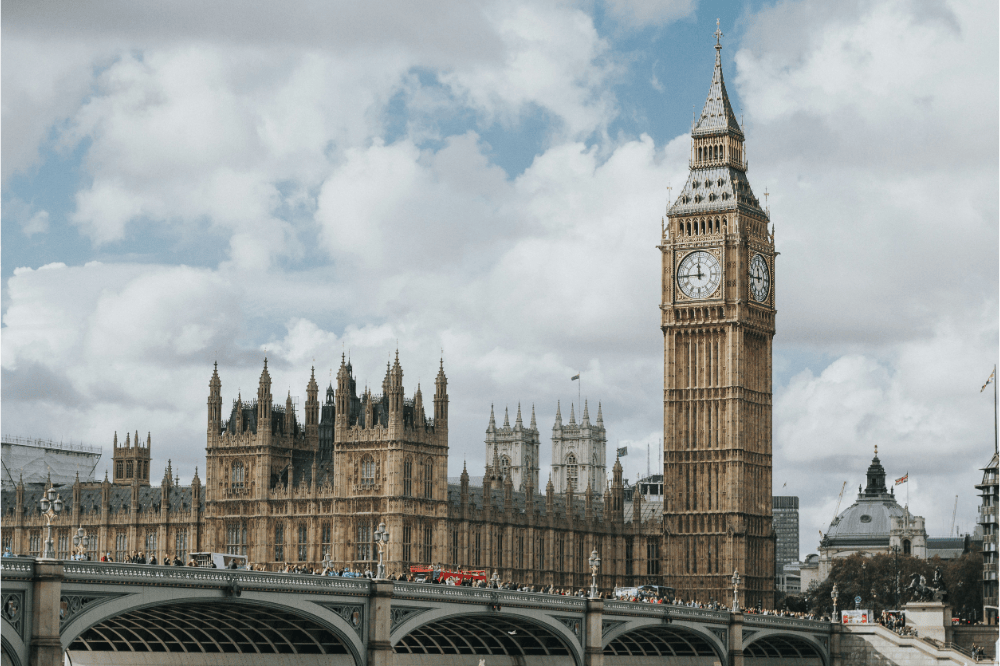
There were some positive measures in parts of the legislative agenda, including plans to invest in social housing and to introduce stronger tenancy protections for domestic abuse survivors, as well as some welcome measures in the Courts Modernisation Bill (previously the Courts and Tribunals Bill).
The Courts Modernisation Bill includes provisions repealing the presumption of parental contact in family court cases, as well as provisions on the unfair use of so-called ‘victim bad character’ evidence in sexual offence trials following a successful campaign by the End Violence Against Women Coalition (EVAW), Rights of Women, Centre for Women’s Justice, Rape Crisis England & Wales and Imkaan. We have jointly raised some concerns about measures to restrict the use of jury trials in certain circumstances, which are included in the same Bill.
Legislation directly related to VAWG was absent in this King’s Speech, with uncertainty about the prioritisation of VAWG and the VAWG Strategy’s implementation, particularly following the resignations of responsible Ministers. Violence against women and girls is referenced only twice in relation to the Police Reform Bill and Armed Forces Bill, in the briefing pack that accompanied the King’s Speech.
We had hoped for legislation to make Relationships and Sex Education mandatory for all 16-18 year olds, and will continue our joint campaigning for this to be delivered following the promise made in the VAWG strategy. This follows the government’s rejection of our amendments to the Children, Schools and Wellbeing Bill in the last Parliamentary session.
Much needed legislation on AI regulation was glaringly absent in the raft of proposed Bills. Instead, the government is proposing a ‘Regulation for Growth’ Bill aimed at ensuring regulators are obligated to prioritise growth and actively support innovation. This includes creating ‘sandboxes’ to allow existing rules to be temporarily relaxed to ‘trial innovative technologies’ across a range of industries, including AI.
We are deeply concerned about the prioritisation of growth above all else when it comes to AI, especially given the extensive evidence of tech-facilitated VAWG – for example, the rapid rise in non-consensual sexually explicit deepfakes. We urge the government to commit to legislation for AI regulation, along with a comprehensive approach to image-based sexual abuse and a Safety by Design Code of Practice for platforms.
We have concerns about the reach of AI into other policy areas, most notably in the Police Reform Bill, which indicates an expansion of facial recognition and other technology in policing. We caution against attempts to justify increased surveillance as a means of tackling violence against women, as we know that it disproportionately impacts Black and minoritised communities and therefore risks further marginalising already over-policed communities and deepening inequalities.
Plans to abolish Police and Crime Commissioners (PCCs) will also be enacted through this legislation – a decision likely to have a significant impact on VAWG organisations and the commissioning landscape. We await further details on these reforms, along with those related to improving policing standards.
What did loom large in the Speech in terms of impacting VAWG are the proposed measures in the Asylum and Immigration Bill, which makes it easier to revoke refugee status and restricts support for those seeking asylum. As we’ve previously stated, such measures threaten to put migrant survivors at greater risk of harm and destitution, and further restrict women’s rights to escape abuse and exploitation.
Proposed restrictions to Article 8 of the Human Rights Act (HRA) will have an acute impact on migrant victim-survivors who rely on the right to family life to remain in the UK. More broadly, we are alarmed by the government’s chipping away at human rights and the principle of universal human rights for all.
We know that the HRA and European Convention on Human Rights (ECHR) are crucial tools for tackling VAWG, as currently demonstrated in the legal battles fought by survivors spotlighted in the ITV drama Believe Me.
The restriction of Article 8 is an example of the ways in which human rights protections are often eroded via anti-migrant agendas. Along with expert VAWG organisations, including those led by and for Black and minoritised women, we continue to call on civil society and parliamentarians to oppose this stripping away of rights, which further endanger migrant survivors and harm us all.
Our messaging guide aims to support members of the public and politicians who care about ending violence against women and girls to respond to narratives which justify such anti-migrant agendas in the name of VAWG.
“Whilst there are some flashes of good to come in forthcoming legislation, VAWG was largely absent from this King’s Speech, along with desperately needed regulation on AI. Instead, the Regulation for Growth Bill and Immigration and Asylum Bill signal a government with ill-judged priorities. Women and girls will bear the cost of both tech companies’ profit-making and the erosion of human rights for an anti-migrant agenda. We urge the government to redirect towards a more rights-respecting agenda, with the prevention of VAWG at its centre.”
06 Oct
 28 Sep
 25 Sep